
Collapse of a Country: Sudan’s civil war shows no signs of ending
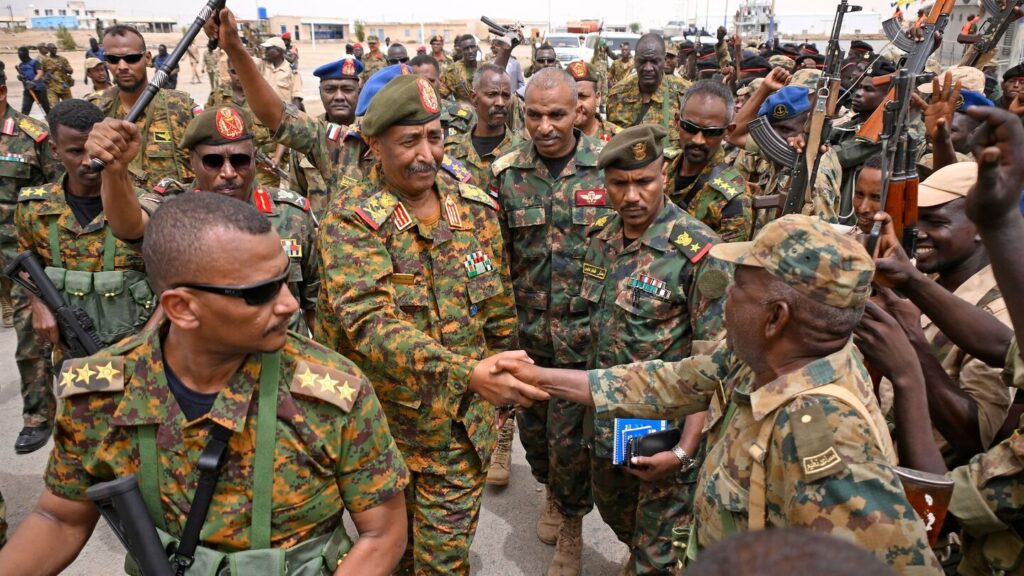
Image: AFP via Getty Images
What started out as a power struggle between Sudan’s forces – the Sudanese Armed Forces (SAF), led by General Abdel Fattah Al-Burhan, and the paramilitary Rapid Support Forces (RSF), led by General Mohamed Hamdan Dagalo, known as Hemedti, – has now spiralled into a full-blown national catastrophe. In mid-July, reports emerged of nearly 300 civilians falling victim to brutal raids by the RSF in several villages across North Kordofan, in central Sudan. Humanitarian groups described these attacks as a “terrible massacre,” with most victims either burned alive inside their homes or shot on the spot. Meanwhile, in the west, in Al-Fashir, North Darfur, the situation is just as bleak, with hundred more people killed in April alone, as the both sides of the conflict ramp up their fight for the regional capital. There have also been reports of summary executions of civilians suspected of collaborating with the RSF, especially in Khartoum, carried out by the SAF.
However, these atrocities are just the tip of the iceberg — violence is becoming a daily grim routine in Sudan, spreading across the entire country. Over half the population — around 13 million people — have already been displaced, and at least 40,000 lives have been lost (conservative estimates). Millions are now driven to hunger, with cholera and other diseases spreading rapidly across the country.
Sudan’s history of conflict is a tangled web that stretches back many decades. The country has experienced a series of coups and deep-rooted struggles related to ethnicity, politics, and economics. It all started back in 1989 when Omar Al-Bashir took power after removing the previous leader. He knew his grip on power was fragile, so he used a tactic called “coup-proofing”. This meant surrounding himself with loyal military men and controlling the SAF. While the military was busy fighting in South Sudan, trouble was brewing in Darfur to the west. That region was ignored for years, with little resources or say in the government. In 2003, Darfur erupted in rebellion, and Al-Bashir responded by arming Arab militias called Janjaweed, who became infamous for their brutal tactics like burning villages, killing civilians, and even raping women. These militias, along with the SAF, waged a campaign of terror that displaced thousands of Darfurians. To keep control over these forces, Al-Bashir created the RSF, led by Hemedti.
Things got worse in 2011 when South Sudan gained independence, taking away a large chunk of Sudan’s oil revenue. This hit the economy hard, and Bashir’s regime started to weaken. To stay in power, he officially made the Janjaweed—now rebranded as the RSF—part of the security forces in 2013. Hemedti was given a lot of independence, controlling mining resources and weapons, and even expanding Sudan’s role in conflicts in Libya and Yemen. Meanwhile, ordinary Sudanese people were suffering more and more as the government focused on military might rather than social services like health and education. Public frustration boiled over in 2018, with protests against austerity and the government’s focus on security. The protests turned violent, and Bashir was finally ousted in April 2019. But the situation took a dark turn when armed men linked to the RSF killed dozens of protesters in the Khartoum massacre, trying to quash the movement.
Despite the violence, protests didn’t stop. People demanded an end to military rule, and after mediation by the African Union and Ethiopia, a power-sharing deal was signed in August 2019. It promised a transition period of three years with both civilian and military leaders in charge. But tensions remained high. In October 2021, the situation exploded again when a coup led by Bashir’s old allies, SAF General Abdel Fattah Al-Burhan and Hemeti, ousted Prime Minister Hamdok. That plunged Sudan back into chaos. In December 2022, the military signed a deal promising a civilian government, but disagreements over military reforms soon spiralled out of control. Fighting broke out in April 2023 between the military and the RSF, turning parts of Khartoum into war zones. Despite efforts to negotiate peace, the fighting shows no signs of stopping, leaving Sudan in a state of uncertainty.
NEW ARMED GROUPS GROW
In Sudan, new militias are cropping up up all over the place. Many of these groups are made up of civilians who had nothing to do with the fighting at the start. The army initially encouraged ordinary people to pick up arms and defend their communities. But now, there are countless independent armed groups operating outside official control, each with their own aims.
In cities like Khartoum, Al-Gezira, and Al-Fasher, local defence units have formed to protect neighbourhoods from the RSF. At first, these groups were meant to defend residents, but they’ve since started acting on their own, with little oversight from the army. In regions like Darfur and Kordofan, tribal and regional militias are also gaining power. Some have joined forces with the army, while others are chasing their own goals — whether it’s land, resources, or political autonomy.
Sudan’s population is incredibly diverse, with around 56 ethnic group, and even those can be broken down into further sub-groups. This makes the conflict even more complex, turning the country into a patchwork of smaller conflicts. Each of these mini-wars is more dangerous than the last, making the overall situation hard to get a handle on.
INTERNATIONAL PLAYERS PROLONG THE CIVIL WAR
The conflict in Sudan has turned into a real battleground for international players, making an already complicated situation even more tangled. Countries like Egypt and Saudi Arabia are supporting the SAF. They’re mainly interested in keeping the region stable and protecting their own economic interests. Saudi Arabia, in particular, sees Sudan as a key part of the fight against Iranian influence in the area. They’ve been providing financial aid and logistical support to boost the military’s efforts, making their support quite clear.
On the other side, the Sudanese Armed Forces (SAF) enjoy the backing of Egypt and Saudi Arabia, both of which are motivated by a desire to preserve regional stability, prevent the RSF from gaining control of state institutions, and counter perceived threats from political Islam or Iranian influence. Saudi Arabia has also provided diplomatic cover and reportedly logistical assistance. Meanwhile, Russia, Iran, and Turkey have been involved to varying degrees. Russia, once aligned with the RSF via the Wagner Group, has since shifted closer to the SAF, aiming to protect its interests in Red Sea access and mining concessions. Iran has resumed military ties with the SAF, reportedly supplying drones and advisors, in a move seen as part of its wider regional resurgence. Turkey has allegedly supported the SAF with my sending arms and drones, adding another layer of complexity to an already internationalised civil war especially as this would be a violation of EU and US sanctions.
BROADER CHALLENGES IN A REGION
The ripple effects are felt well beyond Sudan’s borders. The violence and chaos have caused huge numbers of refugees to flee into neighbouring countries. By May 2024, the UN reported around 675,000 refugees in South Sudan, over 500,000 in Egypt, 75,000 in Ethiopia, 30,000 in the Central African Republic, 600,000 in Chad, and around 3,500 in Libya. These numbers are expected to grow as the fighting continues and more people are forced to leave their homes.
What’s more, the influx of arms and money has made both the SAF and RSF even more emboldened. The United Nations (UN) Security Council has warned that weapons are flooding into South Sudan, turning the region into a powder keg. There are reports of Turkish rifles with optical sights, seized by the RSF in Khartoum, ending up in local communities, which is a clear sign that international sanctions are being flouted. Since late 2024, new and even more deadly weapons have been arriving across the rebel-controlled border, often traded for fuel and food in the shadow economy.
All this illegal trade is turning the Sudanese conflict into a regional mess, similar to what we saw in Libya’s upheavals, with chaos threatening to spill over into Chad, Ethiopia, and the Central African Republic. If regional leaders don’t step in soon, the entire Sudan-Sahel zone could descend into anarchy, with the collapse of states looming large on the horizon.
WHY IT MATTERS
What began as a fight for power between two military groups in Sudan has quickly turned into a full-blown war. It’s a brutal and chaotic situation, with violence spilling everywhere. Entire communities are caught in the crossfire. In July alone, nearly 300 civilians were killed in savage raids. Over 13 million people have been forced to leave their homes. Many are now facing hunger, disease, and suffering, as the chaos tears Sudan apart from within.
This violence isn’t staying within Sudan’s boders either. Arms and illegal trade are spreading into neighbouring countries like Chad, Ethiopia, and the Central African Republic. These countries are now at risk of falling into their own chaos if things don’t get under control. Without quick action from regional leaders, the whole area could slide into collapse and more suffering for millions. It’s a crisis that needs urgent attention before it’s too late.
If you’re keeping a close eye on what’s happening in Sudan, or simply want to get a better grip on the situation in the region, ICE24 has got you covered with our top-notch intelligence updates. Our Situational Reports (SIT-REPs) give you clear, concise, and well-structured updates on the latest developments. Whether it’s an ongoing event or a complicated situation, our reports cut through the noise and keep you in the know.
With our ICEWEEKLY & ICEMONTHLY reports, you’ll have verified, real-time intelligence right at your fingertips. They’re designed to help you track changes as they happen, so you can stay one step ahead and make informed decisions even in this complex environment. With ICE24 you’re always in control and fully briefed on the latest. Contact us to explore how you can stay ahead of the pulse and protect your interests and assets: [email protected]